
Have you made up your mind to reap the benefits the universal life energy force has to offer? Reiki classes allow you to re-invent yourself by tapping into the energy life force. By taking these classes, you get to understand the guiding principles of Reiki. You also grasp the idea that clearing energy blockages restores the body’s natural ability to heal.
A Reiki master is a channel for the universal life energy force. The practitioner guides you to unlock your healing energy. With the master as your guide, you’ll learn and understand the principles and philosophy of Reiki. Plus, the master introduces you to what’s known as the body’s subtle energy systems. During the sessions, you’ll comprehend how this energy system influences your physical and spiritual well-being. Read on to learn more about Reiki classes, the types, and levels of Reiki.
Types of Reiki
Before we go deeper into what Reiki classes entail, let’s learn about the types of Reiki. This is particularly crucial in helping us appreciate how Reiki came to be. Apart from Mikao Usui’s Reiki, there were other forms of Reiki in the early 1900s. Usui Sensei’s Reiki is based on these other practices. That’s the reason why it is called Usui Reiki Ryoho.
Before Mikao Usui, the father of Reiki, came up with his style of Reiki in 1922, there were at least four other types in existence. The early-known style of Reiki known as Reiki Ryoho was created by a Japanese therapist, Matiji Kawakami in 1919. His works about this type of Reiki were published in a book, “Reiki Healing and its Effects.”
Apart from this, other styles were used in the early 1900s. These were Reikan Tonetsu Ryoho attributed to Reikaku Ishinuki; Seido Reishojutsu, developed by Reisen Oyama, and Senshinryu Reiki Ryoho attributed to Kogetsu Matsubara.
Around March 1922, Mikao Usui got a revelation that led him to create his style, Usui Reiki Ryoho, which is in use to date. Due to the effects of World War II, the other types of Reiki became less common and eventually were forgotten. Usui Sensei’s Reiki became more popular and spread to other parts of the world, including the United States.
It’s also good to know that Reiki energy is something that’s been around for more than a thousand years. It’s universally existing, and anyone can channel this energy. In fact, many have channeled the energy through the help of a Reiko master. Unlike any other healing modality, Reiki is transferrable from a master to the students, a process known as attunement.
The process opens up the palm, crown, and heart chakras, building a unique bond between the master and the student. After receiving Reiki, it stays with you for eternity.
The Levels of Reiki
Whether you want to become a Reiki practitioner or a student, you need to know the different levels of Reiki. Understanding these levels is equally important to those who want to reap the most from Reiki classes. Each of the Reiki levels is focused on education, practice, and attunement.
Level 1: The First Degree
It’s traditionally called the Shoden in Japanese. Think of this level of Reiki as an initiation stage for practitioners. Anyone can attend the classes at this level, whose focus is opening the body’s energy channels at a physical level. During these sessions, you link up with the universal life energy force flowing from the cosmos, all the way to your hands via the crown of your head, and the hands.
Level 1 of Reiki classes is often associated with the student feeling an energy sensation in their palms after achieving the first attunement. This can result in a tingling feeling, while some students report pressure, heat, or coolness.
The main focus of this level of Reiki includes:
History and principles
Students delve into the origin and history of Reiki. During the sessions, you’ll get to learn about the story of Mikao Usui, the founding father of Reiki, and his guiding principles.
Hand positions and techniques
You’ll also learn about the unique techniques of positioning your hands, among other basic techniques of Reiki. Through these methods, a student can learn about channeling energy and promoting stress reduction and relaxation.
Self-healing practices
During the first level, you’ll also learn about self-healing techniques such as breath work, meditation, and energy-clearing workouts. These exercises help the body to maintain balance and harmony.
Level 2: The Second Degree
Known as Okuden in Japanese, the second level imparts students with the skills to practice Reiki and open the universal energy channels at deeper levels. This means that a second-degree student can act as a Reiki practitioner for other students.
During the Okuden, you’ll learn about:
Reiki Symbols
You’ll explore the five Reiki symbols, their corresponding energy, and their importance in amplifying healing. The Reiki classes also teach about the specific issues that correspond to the energy healing sessions.
Distance healing
Did you know that it’s possible to send Reiki energy across space and time? Yes, that’s right! You’ll learn how to send the healing energy across space and time to expel past traumas, support loved ones, or promote healing.
Emotional healing
During Reiki classes, it’s vital to understand the relationship between physical health and emotional health. You’ll learn about this, as well as the healing techniques for releasing emotional blockages.
It’s highly necessary to space your second level from the first level by six months. Once done with the second level, take at least a year before proceeding to the third level.
Level 3: The Master Level
Known as the Shinpiden, the third level is often combined with the Reiki master. However, some practitioners may separate the two, leading to their Reiki classes consisting of four levels. Traditionally, the third level is regarded as the master’s level, which means after this level, you become a Reiki master. You can proceed to attune new students as practitioners.
The third Reiki level consists of:
Master symbol
You’ll learn about and receive the Master symbol, which is the highest Reiki symbol. Your Reiki master will teach you about the symbol’s applications in spiritual growth and healing.
Practitioner training
You learn about facilitating Reiki attunements as well as teaching Reiki classes to students at any of the three levels.
Spiritual growth
After your attunement, you learn about embracing a path of continuous spiritual development. Personal growth is also another important emphasis at this level. With the principles of Reiki as your guide, your personal growth is accompanied by Reiki lineage wisdom.
To become a Reiki master, you must maintain a deep commitment to the practice. That’s why it’s highly recommended to take a significant amount of time between your second and master levels. This helps you to know for sure that you want to become a Reiki master and not be influenced by the excitement of the second level.
What Happens During Reiki Classes?
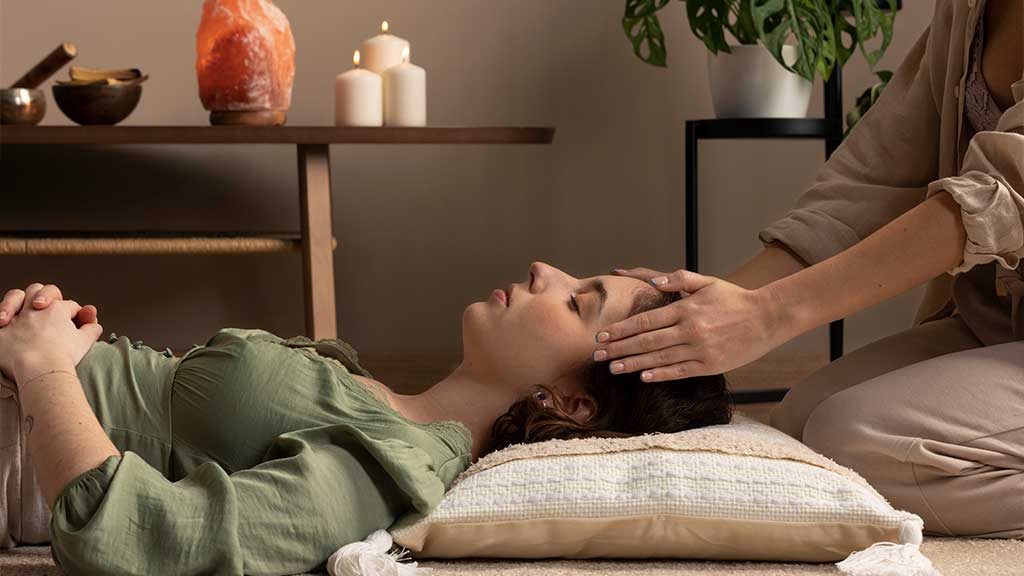
A Reiki master will typically deliver their classes in tranquil and private surroundings. However, there’s no requirement for the settings, and healing can happen anywhere. The sessions entail the student or client sitting comfortably in a chair. Some masters prefer the student to lie flat on a table. Whatever position the client assumes, they’re fully clothed.
The Reiki Master then lightly places their hands on a specific region of the client or student’s head, torso, or limbs. This will continue for about three to ten minutes. If the client’s affected region is injured, the Reiki master holds their hands slightly above the wound.
As the universal life force energy flows to the client or student’s body, they begin to have a tingling, warm, or cold experience. The practitioner stops when they feel the energy transfer is complete. After this, they move their hands to another region and repeat the same.
Conclusion: A Path of Healing and Transformation
Reiki classes prepare students through the three levels of Reiki to become practitioners. As you progress through the levels of attunement, you embark on a profound journey of healing. You become more self-aware and grow spiritually.
Each level broadens your connection to the universal life force energy. Your capacity to facilitate self-healing and that of others expands. Whether you pursue Reiki for professional practice, spiritual development, or personal healing, the levels of Reiki are a roadmap to getting there. So, embrace the journey wholeheartedly, and trust in the process. Most importantly, find a Reiki master to guide you through the transformative power of Reiki and achieve your goals.
Frequently Asked Questions
What are Reiki classes?
Reiki classes are courses or educational workshops where individuals learn everything about Reiki. This includes the principles, techniques, and Reiki healing practices. The classes are led by a Reiki master or practitioner.
Can anyone attend Reiki classes?
Reiki has no special requirements, and it’s not bound by age, experience, or background. That means you don’t even need prior knowledge or special skills to take Reiki classes.
What will I learn in Reiki classes?
Reiki classes are divided into three levels. Each level has distinct things to learn about, including the history and principles of Reiki. You also get to learn about the energy anatomy, hand positioning, and techniques for channeling the universal life force energy. During the last level of Reiki, you’ll learn about conducting self-healing as well as healing for others.
Is there special attire to attend Reiki classes?
No, you don’t need any attire or equipment to attend Reiki classes. You only need to dress comfortably and maintain an open heart and mind.
How long do Reiki classes last?
The duration can vary and depends on your Reiki master’s preferences or your level of training. The first-level classes often take one or two days. The second and third levels can take anywhere between multiple days and a week.